

UGANDA KOB: BEAUTIFUL ANTELOPE OF UGANDA
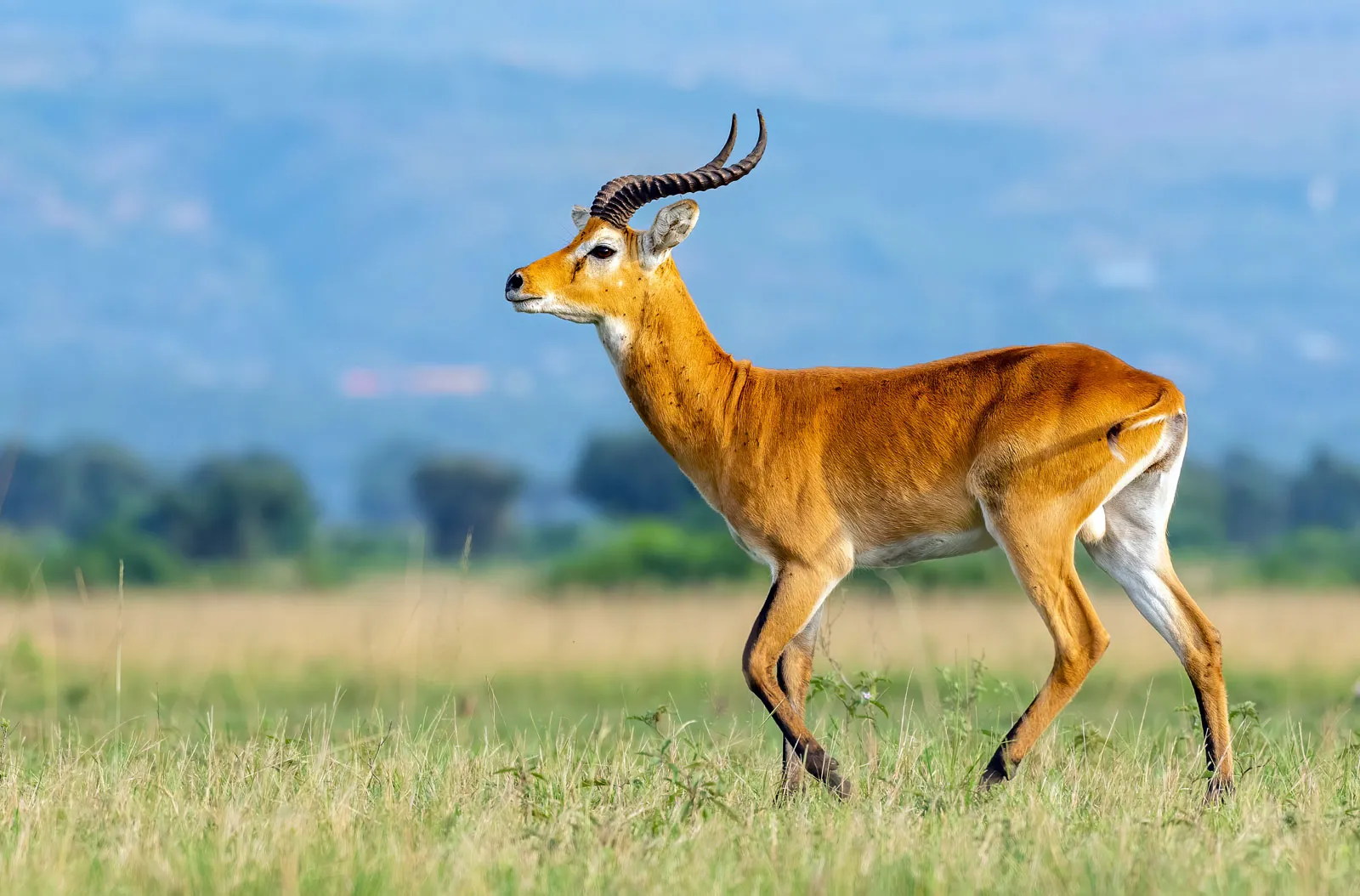
The Uganda kob is one of the most iconic antelope species in East Africa and a defining feature of Uganda’s savanna landscapes. It is a medium-sized, graceful antelope known for its reddish-brown coat, strong herding behavior, and remarkable speed when it escapes predators. Importantly, it is not only a common wildlife species but also a national symbol of Uganda, and it appears on the country’s coat of arms to represent natural wealth and biodiversity.
Furthermore, the Uganda kob plays a central ecological role in savanna ecosystems. It functions as both a primary grazer and a key prey species, and it supports large carnivores such as lions and leopards. Because of this, scientists often use its population health to indicate ecosystem stability in protected areas. In addition, its predictable movement patterns and lek-based breeding system make it one of the most fascinating antelopes for wildlife researchers and safari visitors alike.
Habitat and Geographic Distribution
Uganda kobs mainly inhabit open savannas, floodplains, and wetland edges. They prefer areas with short grass because it improves visibility and helps them detect predators early. Moreover, they rely strongly on water sources, which explains their close association with Uganda’s river systems and lake basins.
In particular, they spread widely across Uganda’s protected national parks, where limited human disturbance and good grazing conditions support stable populations. As a result, conservation areas maintain healthy kob populations across several key landscapes.

Where to See Uganda Kobs in Uganda
If you want to observe Uganda kobs in the wild, several national parks provide excellent opportunities. First and foremost, Queen Elizabeth National Park stands out, especially the Kasenyi Plains, where large herds graze across open savannas.
In addition, Murchison Falls National Park offers strong viewing opportunities, particularly in the northern sector where grasslands support dense wildlife populations. Similarly, Kidepo Valley National Park delivers dramatic sightings as kobs roam freely across vast, remote plains.
Moreover, smaller populations exist in other protected areas and community wildlife reserves. However, visitors most reliably see them in the major parks mentioned above. Consequently, Uganda ranks among the best countries in Africa for observing this species in the wild.

Physical Characteristics and Identification
Uganda kobs are easy to recognize in appearance. They show a reddish to golden-brown coat, while males appear darker and more robust than females. Additionally, both sexes display a distinctive white ring around the eyes and a white throat patch, which makes them stand out clearly against the savanna background.
Furthermore, males grow long, lyre-shaped horns that curve backward. They mainly use these horns for territorial display rather than aggressive combat. In contrast, females do not grow horns and stay slightly smaller, which helps them move more efficiently within herds.
Behavior, Social Structure and Reproduction
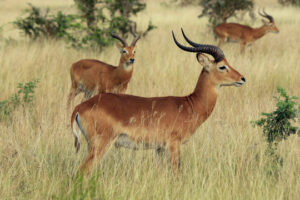
Uganda kobs are highly social animals and organize their behavior around group living for survival and protection. Females and juveniles form large herds that protect them effectively from predators in open savanna habitats. Adult males often establish territories during mating seasons and compete for access to females within defined areas.
Moreover, males participate in a lek system where they gather in specific display areas to compete. Within these leks, males establish dominance through posture, vocalization, and controlled competition. As a result, females choose the strongest and most fit males for reproduction, which improves the genetic quality of the population.

Diet and Feeding Patterns
Uganda kobs strictly graze on fresh grasses. They prefer young, nutrient-rich shoots, especially during the rainy season when vegetation becomes abundant. In addition, they feed near wetlands where softer and more nutritious plants grow.
However, during dry seasons, they adjust their movement patterns and concentrate near permanent water sources. This seasonal flexibility helps them survive in environments with changing rainfall and vegetation conditions.

Predators and Survival Strategies
Lions, leopards, hyenas, and wild dogs frequently hunt Uganda kobs. Therefore, kobs survive by combining awareness, speed, and group protection.
In addition, they rely heavily on open habitats that improve visibility and reduce surprise attacks. When predators approach, they run fast and maintain speed over long distances, which helps them escape even highly skilled hunters. Consequently, their behavioral and physical adaptations help them thrive in the wild.

Conclusion
In conclusion, the Uganda kob is a highly adaptive and ecologically vital antelope species. It uses specialized habitats, forms structured social groups, and plays a key role in the food chain, which helps maintain the stability of Uganda’s savanna ecosystems. Ultimately, its presence reflects both the richness of Uganda’s natural environment and the importance of ongoing wildlife conservation efforts.