
UGANDA NATIONAL MOSQUE (GADDAFI MOSQUE)

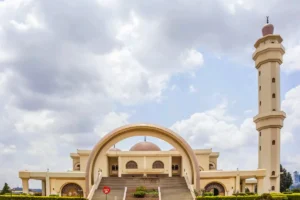
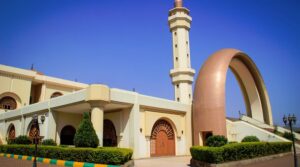
The Gaddafi National Mosque, also known as the Uganda National Mosque, stands as one of the most outstanding Islamic landmarks in East Africa. It is located on Old Kampala Hill in Kampala, where it dominates the skyline with its massive structure and tall minaret. Moreover, it serves as a central place of worship, leadership and unity for Muslims in Uganda and beyond.
In addition, the mosque attracts thousands of worshippers and visitors every year due to its religious importance and architectural beauty. It also plays a major role in promoting Islamic teachings, cultural identity and interfaith understanding. Therefore, the Uganda National Mosque is not only a religious site but also a national symbol of faith, peace and unity.
Historical Background
To begin with, the construction of the mosque was initiated under the support of former Libyan leader Muammar Gaddafi, who strongly believed in strengthening Islam across Africa. He funded and supported its development as part of his vision for Islamic unity and cooperation among African nations. Construction started in the early 2000s and was officially completed in 2006.
Furthermore, after its completion, the mosque was named in his honor as recognition of his contribution. Initially, it replaced an older mosque that could no longer accommodate the growing Muslim population in Kampala. As a result, the new structure provided a much larger and more organized space for worship, administration, and community activities.
Architectural Design
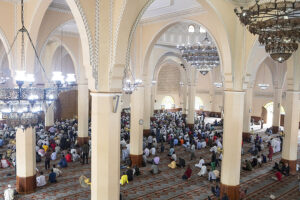
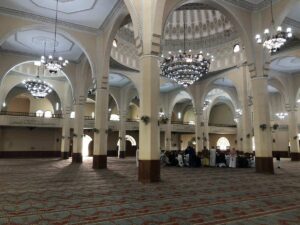
Equally important is the mosque’s magnificent architectural design, which blends Islamic tradition with modern engineering. The structure features a large central dome, beautifully decorated walls, and a prayer hall capable of accommodating thousands of worshippers at once. In addition, the design includes detailed Islamic calligraphy and artistic patterns that reflect spiritual beauty and cultural heritage.
Moreover, the mosque’s minaret is one of its most striking features. It rises high above Old Kampala Hill and offers visitors a 360-degree panoramic view of the entire city. As a result, the mosque not only serves religious purposes but also provides a remarkable tourist experience. Therefore, its architecture represents both devotion and artistic excellence.
Religious and Cultural Importance
The mosque plays a central role in the religious life of Muslims in Uganda. It hosts daily prayers, Friday congregational prayers and major Islamic celebrations such as Eid al-Fitr and Eid al-Adha. Furthermore, it serves as the headquarters of the Uganda Muslim Supreme Council, which oversees Islamic affairs in the country.
In addition, the mosque promotes unity, discipline and moral guidance among the Muslim community. It also provides religious education and supports Islamic leadership programs. Moreover, it encourages peaceful coexistence between Muslims and people of other faiths. As a result, the mosque strengthens both religious identity and national harmony.
Tourism and Visitor Experience
In addition to its religious role, the Uganda National Mosque is a major tourist attraction. Visitors from different parts of the world come to admire its impressive architecture and learn about Islam. Moreover, guided tours are available, offering detailed explanations about the mosque’s history, design and religious significance.
One of the most exciting experiences for visitors is climbing the minaret, which provides a breathtaking view of Kampala city. In the same way, the spacious prayer halls and peaceful environment create a sense of calm and reflection. Therefore, the mosque successfully combines spirituality, education, and tourism in one place.
Social and Community Impact
Notably, the mosque also plays an important role in supporting community development. It provides a platform for religious gatherings, charity work and social support programs. In addition, it helps in educating young Muslims through religious teachings and leadership training.
Furthermore, the mosque encourages unity and cooperation among different Islamic groups in Uganda. As a result, it strengthens social ties and promotes responsibility within the community. Therefore, its impact goes beyond religion and extends into social development and national cohesion.
Conclusion
In conclusion, the Gaddafi National Mosque stands as one of Uganda’s most significant religious, cultural, and architectural landmarks. Through its rich history, grand design, and strong religious influence, it continues to serve millions of people. Ultimately, the mosque represents faith, unity, and peace while also showcasing Uganda’s cultural diversity and heritage.