

THE MYSTERY OF LAKE NKUGUTE
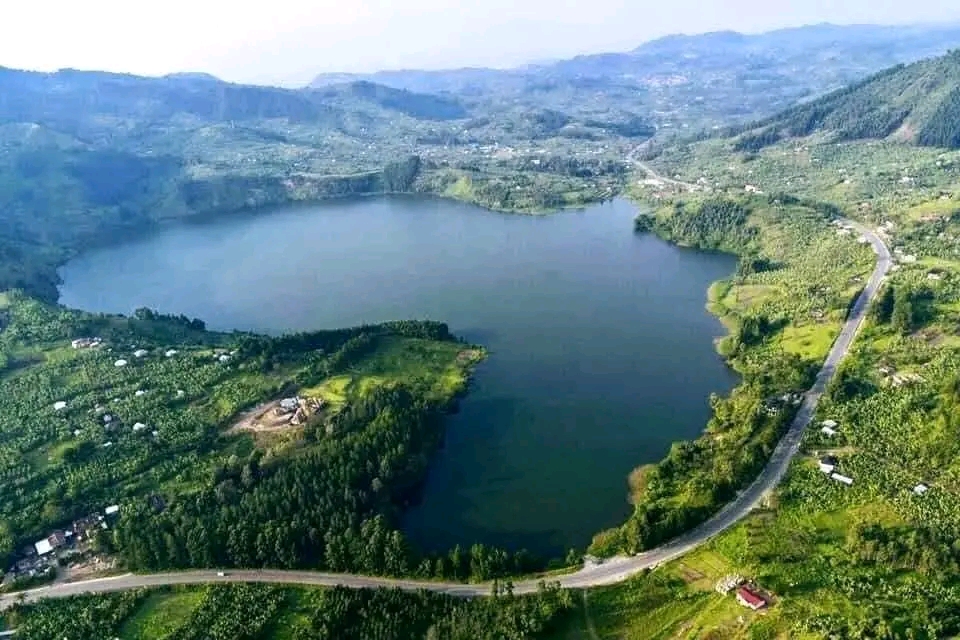
Lake Nkugute stands as one of the most fascinating and mysterious natural attractions in Uganda. It lies in the Bunyaruguru volcanic field within Rubirizi District. This crater lake stands out not only because of its volcanic origin but also because of its unusual shape, which closely resembles the map of Africa when viewed from higher ground. This rare physical feature has made the lake a popular topic among geographers, tourists and local communities.
Beyond its physical appearance, the lake holds deep cultural meaning and historical significance. Surrounding communities have passed down stories and legends about it for generations, many describing it as a place of mystery and spiritual importance. In addition, these beliefs along with its peaceful environment and scenic beauty, give Lake Nkugute a unique identity that blends nature with culture. Although the site is not yet fully developed as a major tourist destination, it continues to attract visitors interested in geography, photography and cultural exploration.
Geography and Formation
Legends and Folklore
In addition to its physical uniqueness, Lake Nkugute is widely known for its cultural stories and legends. The name “Nkugute,” which means “swallow,” comes from local beliefs that the lake mysteriously swallows people. According to oral traditions that communities pass down through generations, people regard the lake as a spiritual place that deserves great respect.
As a result, many locals believe the lake possesses mysterious powers, and they traditionally use these stories to warn people against swimming carelessly or venturing too far into the water. Even today, these legends remain strong within the surrounding communities. They add an element of fear and curiosity, which makes the lake more interesting to visitors. Tourists often find these stories fascinating, especially when local guides share them during visits, blending cultural heritage with the tourism experience.
Tourism and Local Community
Similarly, tourism around Lake Nkugute is gradually developing, although it is still not as advanced as other major attractions in Uganda. Visitors who come to the lake enjoy activities such as sightseeing, photography, nature walks and learning about local traditions. The calm environment makes it ideal for eco-tourism and relaxation. Moreover, the lake supports nearby communities by providing water for domestic use and supporting small-scale farming and livestock activities.
Local people also benefit indirectly from tourism through guiding services, storytelling and selling food or handmade crafts to visitors. If properly developed, the lake could create more employment opportunities and improve the livelihoods of surrounding communities. However, tourism remains limited due to poor infrastructure, lack of publicity and minimal investment. Therefore, improving access roads, accommodation facilities and awareness campaigns would significantly increase its tourism value. At the same time, conservation efforts are necessary to protect the lake’s natural and cultural importance.
Conclusion
In conclusion, Lake Nkugute is a unique destination that combines geological formation, cultural heritage and natural beauty. Its crater origin, mysterious legends and importance to local communities make it a valuable part of Uganda’s tourism sector. With proper development and sustainable conservation, it has great potential to become one of the country’s most recognized tourist attractions.


