
THE UNIQUE BEAUTY OF GOLDEN MONKEYS
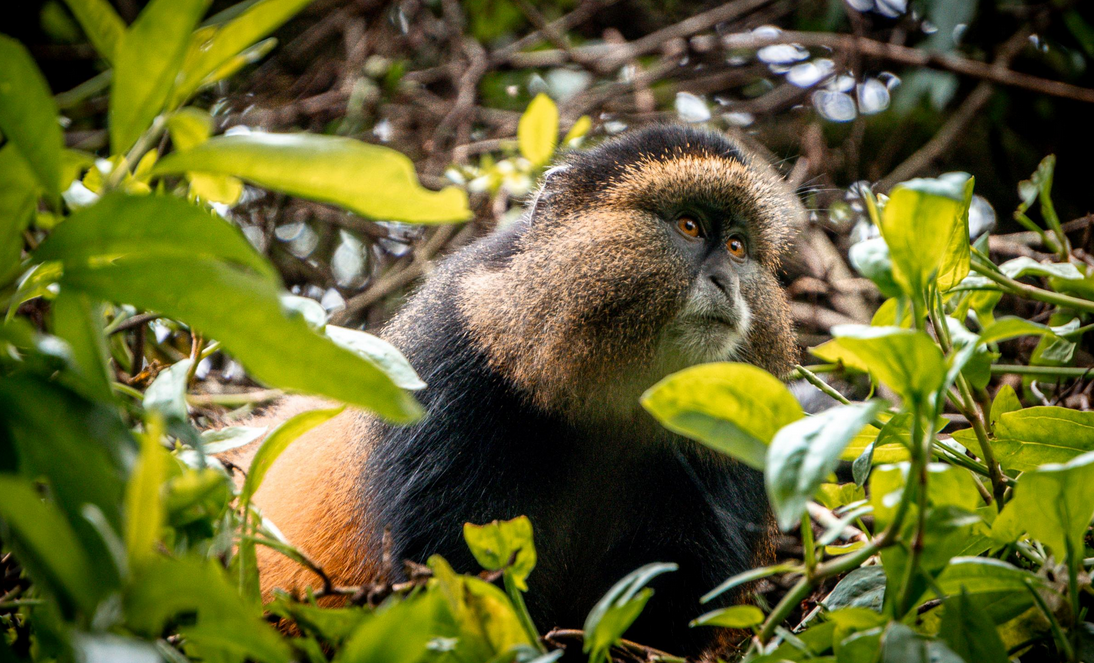
Deep within the misty bamboo forests of the Virunga landscape lives one of Africa’s most playful and colorful primates, the golden monkeys. Moreover, their striking golden-orange fur, fast movements, and highly social behavior create a unique wildlife experience for visitors today. Additionally, watching them leap through bamboo stems, feed, and interact in large groups offers one of East Africa’s most entertaining primate encounters.
Habitat
Golden monkeys live within large social groups reaching sixty individuals while moving across forests during seasonal environmental changes regularly. Moreover, they often concentrate within areas containing ripe fruits but continue depending heavily upon bamboo forests throughout entire yearly seasons. Additionally, studies show golden monkeys prefer mixed habitats containing fruits and bamboo because these areas provide better feeding opportunities consistently.

Behavior
Golden monkeys are highly social animals that usually sleep in small subgroups of about four individuals. Moreover, they often rest at the top of bamboo plants, using tightly woven bamboo stems as natural sleeping platforms. In addition, they tend to stay close to their sleeping areas and frequently return to the same locations, especially when food and safety are readily available nearby.

Diet
Their diet changes with the seasons, with ripe fruits becoming a major food source when available. Additionally, they feed on flowers, young shoots, and various shrubs depending on what the forest provides naturally. However, bamboo remains their most consistent and important food source throughout the year, making it vital for survival.

Mating and Parenting
Female golden monkeys reach maturity at around four to five years and usually give birth to a single offspring after gestation of seven to eight months. Moreover, the young depend heavily on their mothers for care, protection, and learning essential survival skills in the forest. In the wild, golden monkeys can live for approximately twenty to twenty-five years depending on environmental conditions and natural threats.

Tracking Experience
Golden monkey tracking is less physically demanding than gorilla trekking because these primates do not build new nests daily. Instead, they often return to familiar sleeping sites, which makes locating them easier for guides and visitors alike. Therefore, travelers enjoy a relaxed trekking experience suitable for beginners and experienced hikers.

Location
Golden monkeys inhabit the Virunga conservation region, which spans three countries including Uganda, Rwanda, and the Democratic Republic of Congo. Moreover, in Uganda they mainly live in Mgahinga Gorilla National Park, where bamboo forests support their ideal habitat and offer excellent viewing opportunities.
In Rwanda, they inhabit Volcanoes National Park, while in the Democratic Republic of Congo they also live in Virunga National Park. Additionally, Mgahinga remains the most accessible and popular destination for visitors who want to observe golden monkeys in their natural environment today.