

MAJESTIC LIFE OF THE GREY CROWNED CRANE
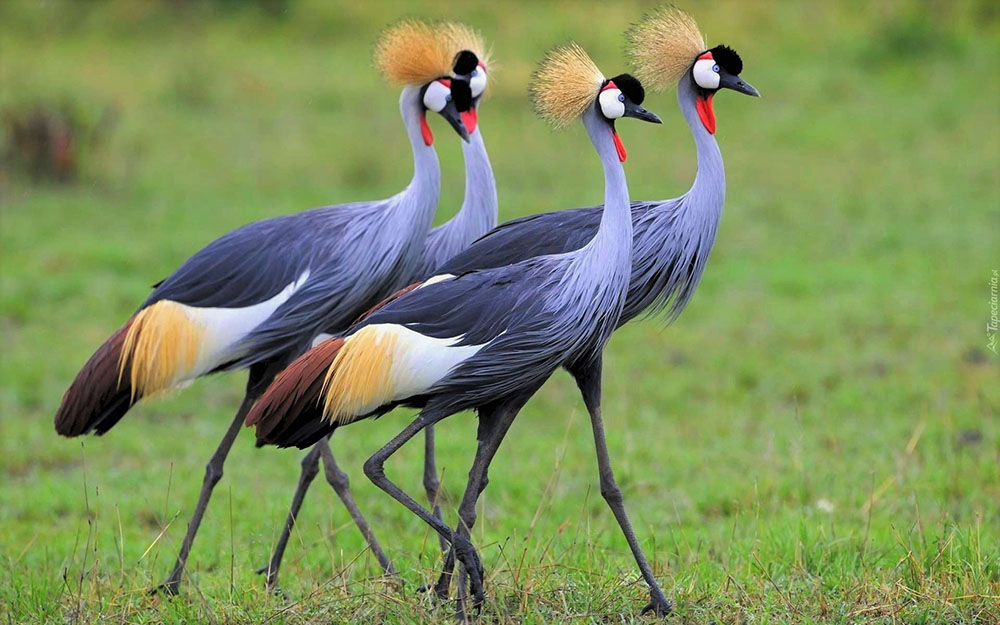
The Grey crowned crane is one of the most beautiful and admired birds in Africa. Known for its golden crown of feathers, elegant appearance and graceful movements, the bird holds special importance in Uganda where it serves as the national bird. In fact, the grey crowned crane appears on Uganda’s national flag and coat of arms, symbolizing peace, pride and freedom.
Moreover, the bird attracts tourists and bird watchers because of its unique beauty and interesting behavior. It commonly lives in wetlands, grasslands and open savannahs where food and water are easily available. Therefore, the grey crowned crane remains one of Uganda’s most treasured bird species.
Physical Appearance
The grey crowned crane is a tall bird with long legs, broad wings and soft grey feathers covering most parts of its body. However, its most striking feature is the golden crown of stiff feathers on top of its head, which gives the bird a royal appearance.
In addition, the crane has white wings with touches of brown and gold, as well as a red throat pouch below the beak. Consequently, its colorful appearance makes it one of the most attractive birds in Africa.
Habitat and Distribution
Grey crowned cranes mainly inhabit wetlands, grasslands, marshes and open fields where they can easily search for food. In Uganda, they are commonly found near swamps, lakeshores, and protected wildlife areas.
Furthermore, the birds prefer environments with enough water and vegetation for feeding and nesting. As a result, wetlands provide ideal habitats that support their survival and breeding activities.
Feeding Habits
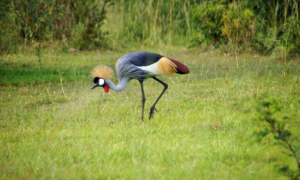
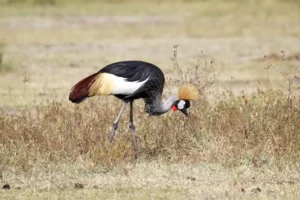
Grey crowned cranes are omnivorous birds that feed on both plant and animal matter. They commonly eat seeds, grasses, insects, frogs, worms and small reptiles found within wetlands and grasslands.
Moreover, the birds use their sharp beaks to pick food from the ground while walking slowly through vegetation. Therefore, their feeding habits help maintain balance within ecosystems by controlling insect populations.
Behavior and Lifestyle
Grey crowned cranes are social birds that often move in pairs or small groups. They are widely known for their graceful courtship dances, which involve jumping, wing flapping and loud calls.
In addition, these dances strengthen bonds between mating pairs and attract potential partners during breeding seasons. Consequently, the bird’s behavior makes it fascinating for tourists and researchers to observe.

Breeding and Reproduction
Breeding among grey crowned cranes usually occurs during rainy seasons when food becomes abundant and nesting conditions improve. During courtship, males and females perform elegant dances while making loud calls to strengthen pair bonds.
After mating, the female lays 2–5 eggs in nests built within wetlands using grasses and other vegetation. Furthermore, both parents protect and incubate the eggs until they hatch after about 28–31 days. As a result, the chicks receive care and protection from both parents during early stages of life.

Conclusion
In conclusion, the Grey crowned crane is a remarkable bird admired for its beauty, graceful behavior, and cultural significance in Uganda. Its presence within wetlands and grasslands contributes greatly to biodiversity and tourism.
Therefore, protecting the grey crowned crane and its habitats is essential for preserving Uganda’s natural heritage and national identity.